



About Dean Levy
An accomplished academic leader and an internationally recognized physician-scientist, Bruce D. Levy, MD, serves as executive vice chancellor for medical affairs, the Joseph Erlanger Distinguished Professor and the George and Carol Bauer Dean of WashU Medicine.
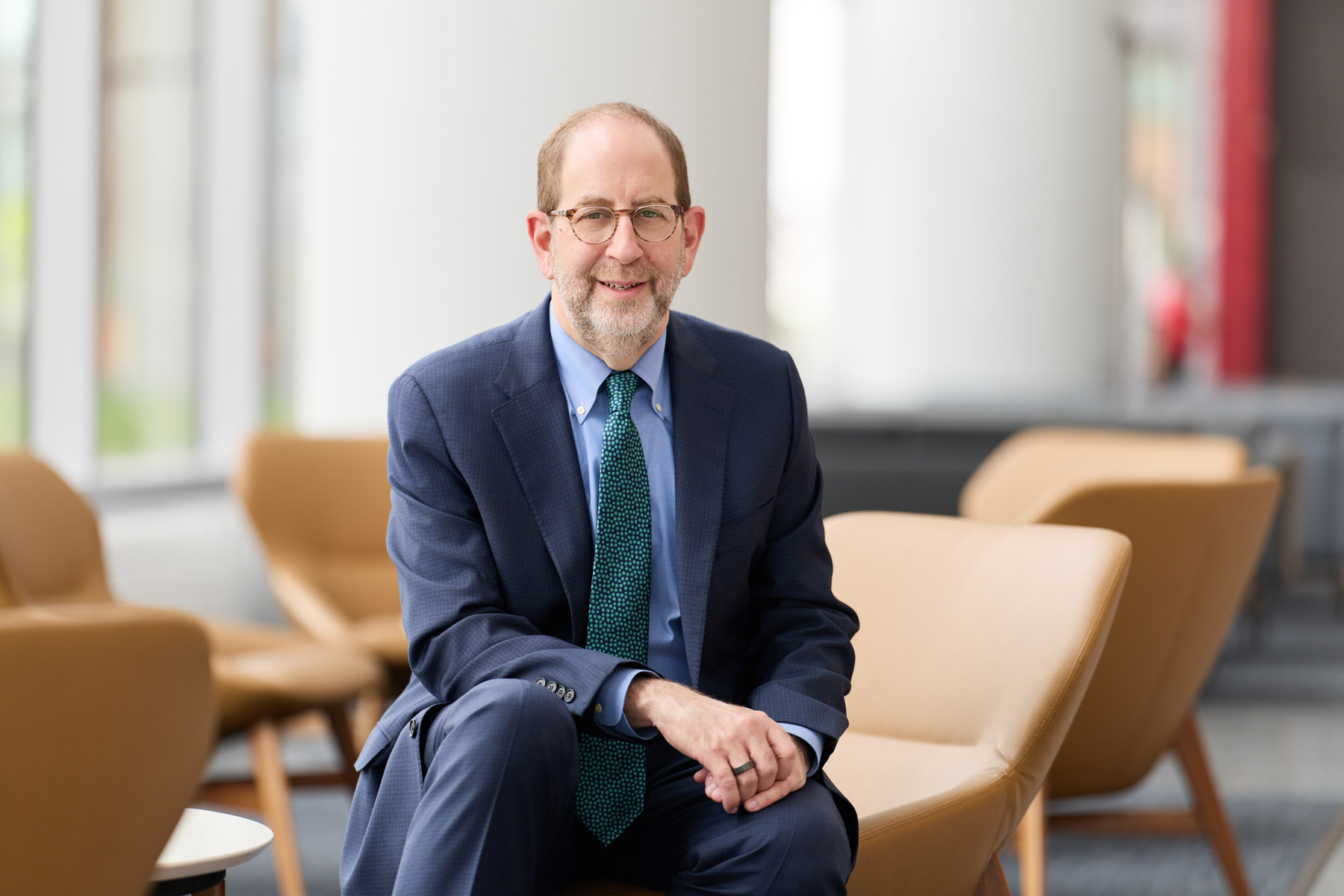
In his role, Levy leads one of the nation’s premier academic medical institutions, where the interconnected missions of research, patient care and education reinforce each other to accelerate discoveries that improve lives around the world.
Levy oversees an institution that is a global leader in biomedical research and discovery and home to one of the largest academic clinical practice groups in the country. WashU Medicine ranks No. 2 among U.S. medical schools in funding from the National Institutes of Health (NIH) and invests $1.2 billion annually in basic and clinical research to find answers to medicine’s greatest challenges. Working closely with BJC HealthCare, he also helps shape the future of one of the country’s leading academic health systems. WashU Medicine’s 2,550 physicians — many of whom are leaders in their fields — provide innovative care informed by the latest research discoveries. Through its nationally recognized educational programs, WashU Medicine trains the next generation of clinicians, scientists and healthcare leaders.
Levy came to WashU Medicine from Harvard Medical School and Mass General Brigham, where he most recently served as the inaugural executive vice chair of the Department of Medicine. During more than three decades at Harvard and Brigham and Women’s Hospital, he held numerous leadership roles, including chair of the Department of Medicine, chief of the Division of Pulmonary and Critical Care Medicine and co-director of the medical residency program, helping to train and mentor generations of physicians. As executive vice chair of medicine for Mass General Brigham, he helped integrate the departments of medicine at Massachusetts General Hospital and Brigham and Women’s Hospital, strengthening collaboration and training programs across the health system.
Throughout his career, Levy has been deeply committed to medical education, mentorship and faculty development. He has guided medical students, residents, fellows and junior faculty and has championed learning environments that foster collaboration, scientific inquiry and compassionate care.
As a physician-scientist, Levy has spent his career dedicated to improving patient care through a compassionate approach to medicine and a commitment to research aimed at identifying the underlying causes of and potential treatments for pulmonary diseases. He co-led the creation of specialty clinics that provide complex medical care, including the Lung Clinical Center and the Lung Research Center, both at Mass General Brigham. Levy also has a decades-long history of prioritizing care for underserved communities, including as volunteer medical director and care provider at the New England Shelter for Homeless Veterans. He further helped establish the Severe Asthma Clinical Center and the COVID Recovery Center at Mass General Brigham.
Through his own research, Levy has made major scientific contributions to understanding inflammatory lung conditions, such as asthma, pneumonia, acute respiratory distress syndrome and long COVID. Much of his work has focused on molecules in the body — called “specialized pro-resolving mediators” — that he first identified as promoting healing after lung disease. He has published a landmark series of studies describing important molecular signals involved in inflammatory asthma responses in the lungs and their potential as targets for new therapies. His research suggests that helping the body “turn off” its inflammatory response after a lung infection has resolved could represent a novel host-directed treatment strategy that could mitigate pneumonia morbidity and mortality.
A prolific scholar, Levy’s lab has been continuously funded by the NIH since 1993. In that time, he has authored more than 300 peer-reviewed journal articles and holds more than 10 patents. In 2016, Levy co-founded Nocion Therapeutics, a biotechnology startup company that emerged from his research. The company is evaluating an investigational drug for reducing chronic cough in phase 2 clinical trials at sites across the U.S., Canada and Europe. Recognizing the critical role that academic medical institutions play in advancing discoveries from the laboratory to the bedside, Levy has long supported entrepreneurship and collaborations with industry to accelerate the development of new diagnostics, therapeutics and technologies.
Levy earned his bachelor’s degree in biology in 1984 and his medical degree in 1988, both from the University of Pennsylvania. He completed his residency in internal medicine at Brigham and Women’s Hospital, where he served as chief medical resident. He remained at Brigham and Women’s Hospital for clinical fellowships in pulmonary and critical care medicine and research fellowships in medicine and biochemistry. In 1993, he joined the faculty of Harvard Medical School and became an associate physician at Brigham and Women’s.
Levy is a fellow of the American College of Physicians and an elected member of the American Society for Clinical Investigation and the Association of American Physicians. He is a member of the American Thoracic Society, where he has served as chair of the Publication Policy Committee and on the Board of Directors. He is also a fellow of the American Thoracic Society and the European Respiratory Society.