



Still standing: Inside a new era of ALS treatment
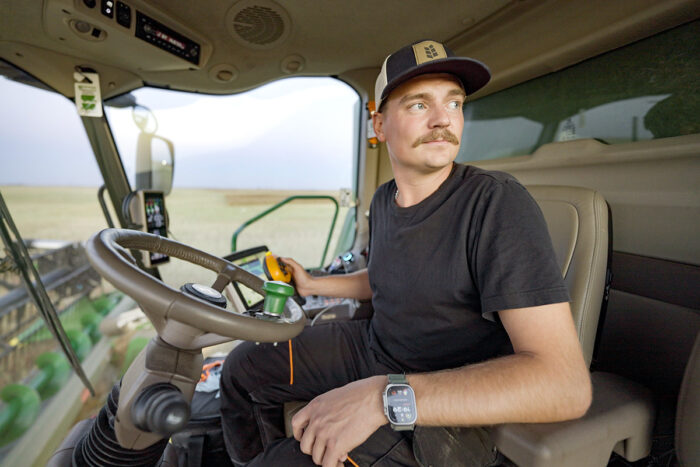
At dawn in rural Saskatchewan, the air is cool and damp, the grain still heavy with dew. Combines sit idle, waiting for the sun to dry out the field to make harvest possible. When it does, the machines will roar to life and work will stretch well past sunset.
For Tre Archibald, waiting has never been his strong suit.
Five years ago, Tre was told he had amyotrophic lateral sclerosis (ALS) — or Lou Gehrig’s disease. The words came with a timetable attached: two to five years life expectancy. He could wait for the inevitable and simply accept what was coming, or he could do something about it.
A disease long defined by certainty
ALS is a motor neuron disease that attacks the cells connecting the brain and spinal cord to the muscles. As those neurons die, muscles weaken and waste away. Speech, swallowing, movement and breathing all become progressively harder.
“ALS has always followed a very predictable, downhill course,” explains Timothy M. Miller, MD, PhD, who has devoted his career to understanding it. “It’s relentlessly progressive. People lose strength over time — usually quickly. Life expectancy is only 2-5 years from symptom onset. That’s always been the case with ALS.”
That inevitability of the disease shaped everything — from how doctors delivered the diagnosis and treatment options to how families planned for their futures. Genetic testing was often avoided, not because answers weren’t wanted, but because there was nothing actionable to do with them.
Then science discovered a new path forward.
Following the gene
In 1993, researchers identified the first genetic mutation associated with inherited ALS: Superoxide Dismutase 1 (SOD1). Mutations in the SOD1 gene cause a toxic protein to misfold and accumulate, poisoning motor neurons. If ALS could be driven by a specific molecular mechanism, perhaps it could be targeted and interrupted.
That idea became the foundation of over two decades of research led by Miller at WashU Medicine. His lab focused on a simple but radical question: What if we could shut down the disease at its source?
Eventually the answer was found in the form of an antisense oligonucleotide therapy — a way to reduce the production of the toxic protein itself. Lower the protein, slow the disease. And maybe, against all historical precedent, change its course.
In partnership with Ionis Pharmaceuticals and now Biogen, tofersen was developed as a targeted drug therapy for those with the SOD1 gene. After clinical trials led by Miller, it was eventually approved by the FDA in April 2023.
From bench to bedside and back
Scientific breakthroughs rarely move in straight lines. But the WashU Medicine ALS Center was built to ensure research and patient care moved together. Clinicians observe not only symptoms, but stories of decline, or in some cases, progress. They witness first hand what patients regain, what they struggle with and what changes first. That information flows back into the lab, refining hypotheses and shaping the next study.
Long-term data from SOD1-targeted therapy showed that 20–25% of treated patients stabilized or even improved over three years. In ALS, where decline was inevitable and improvement was once considered impossible, the statistics were staggering.
So were the stories.
Finding balance again
Paula Trefiak grew up with ALS in her life. Twenty-six of her family members, including her father, died of the disease. She learned to walk by pushing family members around in their wheelchairs. And she learned to read by holding up books and newspapers relatives could no longer hold on their own.
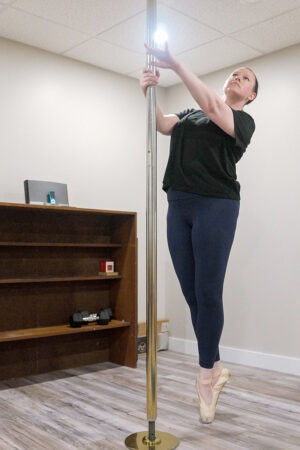
As a dancer and ballerina, Paula had always understood her body through movement. Balance mattered. Control mattered. And before ALS, movement wasn’t just functional — it was expressive. And after her diagnosis, ballet was no longer an option.
But a couple years after treatment began, something unexpected happened. Not only did her disease stabilize, but her sense of physical control began to return. Subtle at first. Then unmistakable. Eventually, Paula did something she once believed ALS had taken from her for good: she went back to ballet.
“It’s still shocking,” she says. “To be able to put on my pointe shoes and get up on my toes? It’s just really exciting. I didn’t expect to be here at this point.”
A first for an ALS patient
Struggling with walking was not new to Rickey Malloy. He had knee issues for years, and his pain was visible when he walked. So, when he started to deal with greater fatigue in his legs, he thought it was more of the same. Eventually he noticed one leg was getting smaller than the other. That’s when he knew it was something else.
“It took more than a year before I was able to get diagnosed,” says Rickey. “It wasn’t until I was referred to WashU Medicine and got genetic testing that we found out I had ALS and the SOD1 gene.”
Rickey was the first patient to receive tofersen at WashU Medicine after its FDA approval. But even after treatment and regaining strength, his knee pain continued to get worse.
“It was apparent the disease was stabilizing, and he was even getting stronger,” says Sean Smith, MD, MPHS, and the clinical director at the WashU Medicine ALS Center. “So, it was actually the pain in his knee that was now limiting him. That’s when we decided to move forward with his knee replacement surgery.”
Rickey quickly realized the opportunity treatment had given him. “I talked to my nursing staff. To Dr. Smith. Nobody had heard of anybody that’s had ALS get a knee replacement surgery. I think I’m the first ever.”
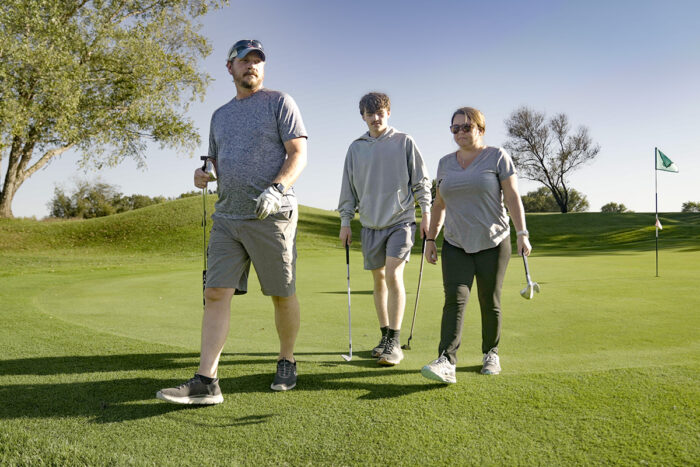
Today, he continues to make the trip to WashU Medicine every month for his tofersen injection, and gets personalized rehabilitation and physical therapy at WashU Medicine, helping him maintain independence, quality of life and find new hobbies to keep him active.
What hope looks like in real life
For families like the Morrises, ALS has always been present.
Jessica Morris lost her father to ALS when she was six. Twenty-two members of her extended family have died from the disease. For years, the family lived with the unspoken fear of knowing the gene was there, but unable to do anything about it.
“There was no point in testing,” Jessica recalls. “There was nothing you could do.”
Until there was.
When Jessica was diagnosed with SOD1 ALS, it was devastating, but she was ready to do whatever it took to fight for more days with her family. And thanks to the groundbreaking research at WashU Medicine, a treatment option her family never had before finally existed.
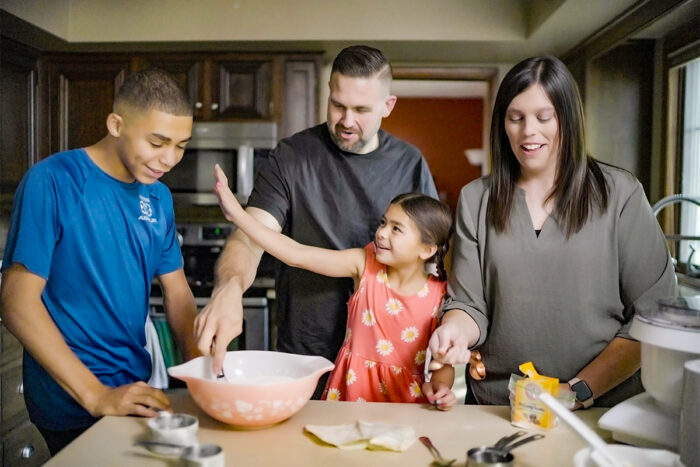
Her husband, Mark, remembers moments that still feel surreal. “She was using electric carts to get around stores and shop,” he says. “Now she’s walking up stairs or going fishing on her own.”
Jessica appreciates every new day she gets to spend with Mark and their kids. “To think I might get to watch my daughter get married someday –– that’s everything to me.”
“If you didn’t know, you wouldn’t know”
Back in Strongfield, Saskatchewan, Tre’s brother Brock remembers the day Tre told him he had ALS vividly. “When he was diagnosed, it was pretty much a death sentence,” Brock says. “Then almost immediately, he heard about this trial. And suddenly there was hope.”
Brock traveled with Tre to Calgary for a clinical trial. They didn’t know if he would qualify, or if it would work. They only knew it was a chance.
He was told he had five years to live, but five years later Tre works 14 to 18-hour days during harvest. He no longer needs ankle braces, and his lung function has returned to near normal. He plans not for decline, but for the next decade of farming, community life and family responsibility.
“If you didn’t know him,” Brock says, “you wouldn’t know he has ALS. He can do everything on the farm now that he did five years ago.”
Inspired to do more
No one at WashU Medicine claims ALS is solved. SOD1 mutations account for only a small percentage of cases. Sporadic ALS, along with other genetic forms, still demand answers. But something fundamental has changed.
ALS is no longer a disease defined solely by inevitability. It is now a disease with footholds and places where science can intervene, slow progression and sometimes give back what was lost.
In the end, the most powerful evidence isn’t found in lab results or journal publications. It’s found in fields at sunset. In stairs climbed without assistance. In families daring to plan future vacations.
Bob Bucelli, MD, PhD, and Co-Director of the ALS Center, is continually amazed at the relentless drive his patients have to fight the disease. “You look at these individuals and the grit and all that they go through and deal with day in, day out — with living their lives. How can you not be inspired by that?”
ALS still takes too much. But thanks to the commitment, collaboration and work being done at WashU Medicine, it no longer takes everything.