
Innovative CAR-T cell therapy receives FDA Breakthrough Therapy designation
Immunotherapy for aggressive T-cell cancers developed by WashU Medicine researchers moves to faster approval pathway
 Alise O’Brien Photography
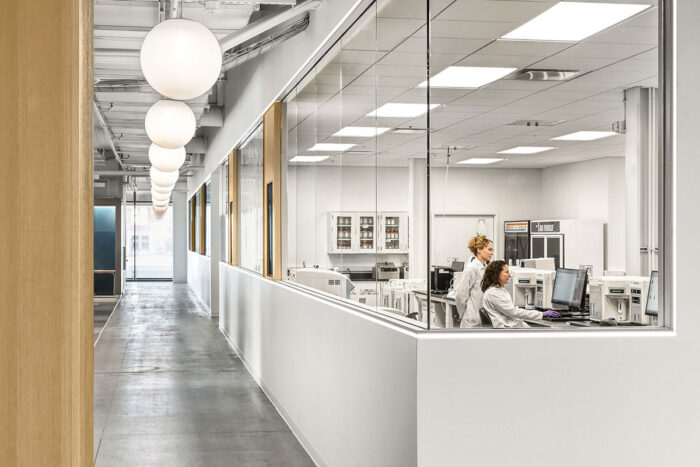
An innovative cell-based immunotherapy developed by WashU Medicine researchers has received Breakthrough Therapy designation from the FDA. The novel CAR-T cell therapy is licensed to Wugen, a WashU Medicine startup based in the Cortex Innovation District in St. Louis (shown).
A cell-based immunotherapy designed to treat rare and aggressive types of blood cancer has been granted Breakthrough Therapy designation by the U.S. Food and Drug Administration (FDA). Developed by researchers at Washington University School of Medicine in St. Louis, this innovative CAR-T cell therapy is licensed to Wugen, a WashU Medicine startup biotechnology company based in St. Louis’ Cortex Innovation District.
The immunotherapy was developed by WashU Medicine physician-scientists who treat patients at Siteman Cancer Center, based at Barnes-Jewish Hospital and WashU Medicine.
The therapy — called WU-CART-007 (soficabtagene geleucel) — targets specific blood cancers called T-cell acute lymphoblastic leukemia (T-ALL) and T-cell lymphoblastic lymphoma (T-LL). These are aggressive forms of blood cancer that originate in the immune system’s T cells, a type of white blood cell important for the body’s immune response. These cancers often don’t respond at all to standard care or return after several rounds of treatment, leaving patients with few treatment options and poor prognoses. Stem cell transplantation is the only curative treatment for such cancers, but these patients rarely qualify for it because they must first achieve remission following early rounds of chemotherapy, which is rare for these blood cancers.
The FDA’s Breakthrough Therapy designation aims to speed up the development and regulatory review of treatments for serious or life-threatening conditions, especially therapies that may offer substantial improvements over existing options. The Breakthrough Therapy designation for Wugen’s immunotherapy is based on preliminary clinical evidence showing early success in treating these aggressive blood cancers. Early-phase clinical studies have demonstrated that the therapy can selectively target and eliminate cancerous T cells with manageable side effects.
About 1,000 people are diagnosed with T-cell cancers each year in the U.S. If the cancer does not respond to treatment or returns after initial treatment, patients survive an average of six months, and fewer than 7% are still living at the five-year mark.
“This therapy has the potential to enable long-term survival for this patient population by controlling the disease and allowing patients — who would otherwise not be eligible — to proceed to stem cell transplantation, the only potentially curative treatment for these blood cancers,” said WashU Medicine oncologist John F. DiPersio, MD, PhD, the Virginia E. & Sam J. Golman Professor of Medicine and director of WashU Medicine’s Center for Gene and Cellular Immunotherapy, who first developed the therapy in his lab at WashU Medicine. “We remain hopeful that the ongoing Phase 2 study will be completed soon, and we’ll have positive results — but we’ll need some time to see how the patients do in both short-term and long-term follow up.”
DiPersio treats patients at Siteman Cancer Center and founded Wugen alongside other WashU Medicine investigators, including Matthew Cooper, PhD, who then was on the WashU Medicine faculty and now serves as Wugen’s chief scientific officer. The researchers worked with WashU’s Office of Technology Management (OTM) to launch the company in 2018.
The early-phase clinical trial that led to the Breakthrough Therapy designation was conducted in multiple study centers in the U.S., Australia and Europe. The Phase 1 study included 28 adult and adolescent patients with either T-cell lymphoblastic cancer that returned after several lines of therapy or that never responded to treatment. Of 11 patients who could be evaluated after treatment, the overall response rate was 91%, meaning 10 patients either showed no signs of cancer after treatment or their cancer cell burden was reduced significantly. Eight out of 11 patients (72.7%) achieved complete remission. At the study’s data cutoff, six who underwent a transplant remained in remission, with no evidence of disease six to 12 months later, according to the study published in the journal Blood.
“This FDA Breakthrough Therapy designation for soficabtagene geleucel highlights the role of Siteman Cancer Center, a leading NCI-designated Comprehensive Cancer Center, and WashU Medicine in advancing innovative CAR-T cell therapies for aggressive T-cell leukemias and lymphomas,” said Timothy J. Eberlein, MD, director of Siteman Cancer Center and the Spencer T. and Ann W. Olin Distinguished Professor at WashU Medicine. “The dedicated work of our physician-scientists and clinicians is translating the most cutting-edge cellular immunotherapy research into the newest treatment options for patients with relapsed or refractory T-cell acute lymphoblastic leukemia and T-cell lymphoblastic lymphoma.”
The phase 2 trial is currently ongoing. At the Siteman site, the clinical trials have been led by principal investigator Armin Ghobadi, MD, a professor of medicine, director of cellular therapies at Siteman, and clinical director of WashU Medicine’s Center for Gene and Cellular Immunotherapy. Siteman Kids at St. Louis Children’s Hospital and WashU Medicine is a key site for the pediatric portion of the clinical trial, co-led by Thomas Pfeiffer, MD, an assistant professor of pediatrics. Ghobadi and Pfeiffer have no financial interest in Wugen.
A major advantage of the treatment is its “off-the-shelf” availability, eliminating the need to manufacture an individualized cell product for each patient. The cell therapy can be prepared in advance from cells donated by healthy individuals and used to treat any patient with a T-cell cancer. In contrast, already-approved CAR-T cell therapies are adapted from the patient’s own immune cells, a process that typically takes three to four weeks. The accelerated treatment timeline of the Wugen immunotherapy reduces logistical and financial barriers associated with most cell-based therapies. This speed can make a meaningful difference because it is not unusual for patients with these aggressive cancers to die while waiting for the therapeutic cells to be prepared.
These particular blood cancers present a unique challenge because the therapeutic cells and the cancer cells are both T cells, so DiPersio and his colleagues came up with further innovations to prevent the therapeutic T cells from mistaking one another for the cancer and causing CAR-T cell fratricide. All other approved CAR-T cell therapies target B cell cancers, which do not have this T cell self-targeting complication.