
Nasal vaccine combats bird flu infection in rodents
Study shows novel vaccine design and delivery protect against H5N1 variants
 Getty Images
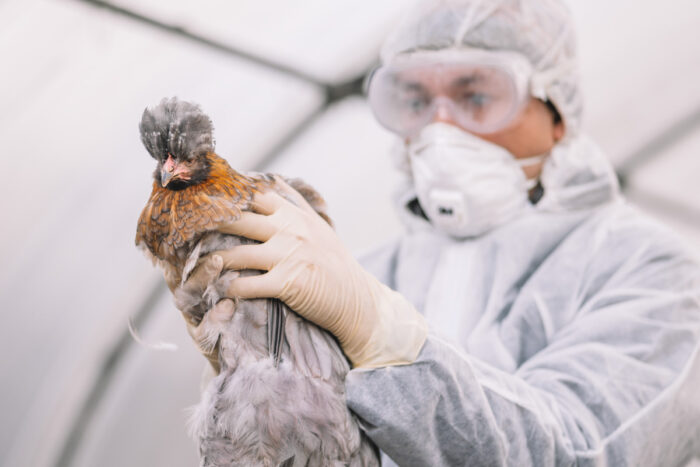
Researchers at WashU Medicine have developed a nasal vaccine against the highly pathogenic H5N1 avian influenza virus, or bird flu, which has jumped from wild birds to livestock to humans. When tested in rodents, the vaccine elicited a strong immune response and prevented infections in animals exposed to H5N1.
Since it was first detected in the U.S. in 2014, H5N1 avian influenza, commonly known as bird flu, has jumped from wild birds to farm animals and then to people, causing more than 70 human cases in the U.S. since 2022, including two fatalities. The virus continues to circulate among animals, giving it the opportunity to develop the ability to spread among humans and potentially cause another pandemic.
To mitigate the risk of such an event, researchers at Washington University School of Medicine in St. Louis developed an intranasal vaccine that elicited strong immune responses when tested in hamsters and mice and prevented infections in exposed animals. Because pre-existing immunity from prior seasonal influenza infection or vaccination could diminish the efficacy of H5N1 vaccines, the team also confirmed their vaccine remained effective regardless of prior flu exposure.
The results are published Jan. 30 in Cell Reports Medicine.
“This particular version of bird flu has been around for some time, but the unique and totally unexpected event where it jumped across species into dairy cows in the United States was a clear sign that we should prepare for the event that a pandemic may occur,” said Jacco Boon, PhD, a professor in the WashU Medicine John T. Milliken Department of Medicine and co-senior author of the study. “Our vaccine to the nose and upper airway — not the shot-in-the-arm vaccine people are used to — can protect against upper respiratory infection as well as severe disease. This could provide better protection against transmission because it protects against infection in the first place.”
Optimizing vaccine efficacy
Although a bird flu vaccine already exists, it was developed based on older strains of the virus, may not be effective against current variants and is not widely available. To create a new vaccine to better protect against bird flu, Boon and his collaborators leveraged the nasal vaccine technology developed at WashU Medicine by study co-authors Michael S. Diamond, MD, PhD, the Herbert S. Gasser Professor of Medicine, and David T. Curiel, MD, PhD, a professor of radiation oncology. A COVID-19 vaccine based on their approach has been available in India since 2022 and was approved for clinical testing in the U.S. last year.
Strong immune responses depend on how well the body can recognize a pathogen. For the H5N1 vaccine’s antigen, Boon and co-author Eva-Maria Strauch, PhD, an associate professor of medicine who specializes in antivirals and protein design, selected specific proteins from H5N1 representative of circulating bird flu viruses that had infected humans. They then created an optimal antigen — the bit of a pathogen the immune system reacts to — using common features of these viral proteins and inserted the antigen into a harmless, non-replicating virus called an adenovirus, which acts as the delivery vehicle for the vaccine. This approach to antigen design and adenovirus delivery is similar to the COVID-19 nasal vaccine.
The researchers tested the nasal vaccine in hamsters and mice and found near-complete protection against infection. In comparison, and as expected, current seasonal influenza vaccines provided little protection against H5N1 infection. Both animal models showed better protection against H5N1 infection from the nasal spray vaccine than from the same formula administered through traditional intramuscular immunization. Further, strong protection emerged even when the nasal vaccine was given as a low dose against a high exposure to bird flu.
Nasal delivery of the vaccine generated a strong immune response throughout the body, especially in the nose and respiratory tract. A particular advantage of this compared to intramuscular immunization, Boon noted, is that it provides much better protection against infection in the nose and lungs and therefore likely protects against transmission as well as against severe disease.
“We’ve shown that this nasal vaccine delivery platform we conceived, designed and conducted initial testing on at WashU Medicine can prevent H5N1 infection from taking hold in the nose and lungs,” said Diamond, the co-senior author of the study. “Delivering vaccine directly to the upper airway where you most need protection from respiratory infection could disrupt the cycle of infection and transmission. That’s crucial to slowing the spread of infection for H5N1 as well as other flu strains and respiratory infections.”
In addition to testing the vaccine’s effectiveness, the researchers investigated whether existing immunity from other flu vaccines would negatively affect the H5N1 vaccine’s performance. They found that even with pre-existing immunity, the nasal vaccine still provided strong protection, a critical feature if the vaccine is to be of practical use since most individuals, except young children, have many prior immune experiences with influenza virus or vaccines.
The researchers said the next steps are to conduct additional studies of the vaccine in animals and in organoids representing human immune tissue, as well as to develop new versions of the vaccine that further minimize the effects of prior seasonal influenza infection and that promote greater antiviral responses.