

Study explains how ketogenic diets prevent seizures
New findings in mice shed light on brain’s response to the keto diet, long known to help treat some patients with epilepsy
 Sara Moser/WashU Medicine
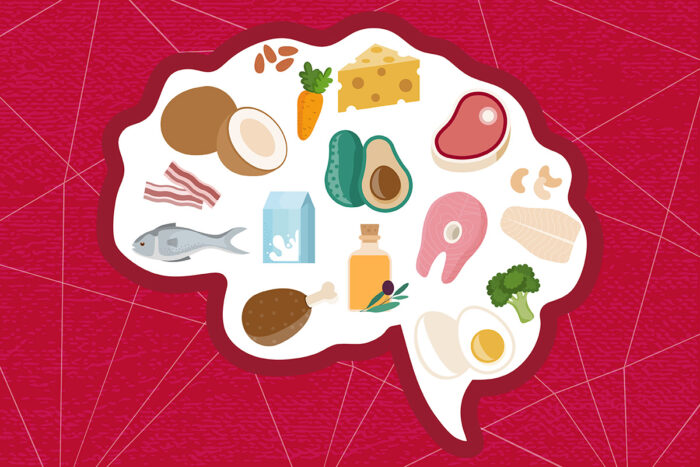
Ketogenic diets, which are high in fat and very low in carbohydrates, have long been known to reduce epileptic seizures in some patients, but it hasn’t been clear why. A new study by WashU Medicine researchers shows in mice that the diet causes changes in the brain that dampen signaling between cells, opening a potential pathway to targeted therapies.
A ketogenic diet — one that is high in fat and extremely low in carbohydrates — has been known for decades to reduce seizures in some epilepsy patients. But how the highly restrictive diet achieves these effects has not previously been understood.
Researchers at Washington University School of Medicine in St. Louis have now shown in mice that the diet causes physical changes in brain cells affecting how they send information to one another, dampening the strength of the signals between them. This quieter neural landscape might explain how the diet calms the overactive electrical signaling that characterizes an epileptic seizure.
The study appears this month in Cell Reports.
Ghazaleh Ashrafi, PhD, an associate professor in the WashU Medicine Department of Cell Biology & Physiology who led the study, said that the findings point to possible new ways of treating epilepsy.
“By better understanding how the diet works, it provides new avenues to develop interventions that are not as strict as the diet itself but still control seizures,” Ashrafi said.
Changing the brain by changing its fuel
A very strict version of the ketogenic diet has typically been used in children with epilepsy whose seizures do not respond to standard medications. In most of these patients, 90% of the patient’s daily calories must come from high-fat sources for the diet to work. With strict adherence, a ketogenic diet has been shown to reduce seizures by approximately 50% in some patients.
The high-fat, carbohydrate-restricted diet causes the liver to generate chemical compounds called ketones. Neurons in the brain metabolize ketones as fuel in the absence of glucose from carbohydrates, which would normally be their energy source. Ashrafi explained that although the ketogenic diet is effective at reducing seizures in epileptic patients, most people are unable to maintain compliance with the extremely strict diet, and even a slight deviation from the regimen eliminates its benefits.
While it was generally accepted that the switch to ketones as neuronal fuel was behind the anti-seizure effect, what specifically was happening in the brain was not known. Ashrafi and her colleagues sought to identify the specific changes in neurons triggered by the ketones as a way to find new targets for effective anti-seizure therapies that could be less burdensome for patients than wholesale diet changes.
Studying mice that had been restricted to a diet of high-fat pellets, Ashrafi and co-senior authors Gabor Egervari, MD, PhD, an assistant professor of genetics and biochemistry, and Vitaly A. Klyachko, PhD, a professor of cell biology and physiology, both at WashU Medicine, looked for changes in genetic activity in the hippocampus, the part of the brain where seizures commonly originate. They found hundreds of alterations, many of which were associated with genes connected to the functioning of synapses, the tips of brain cells that send messages to each other.
Having narrowed the scale of their search, the researchers then measured how the behavior of the synapses had changed in mice on the keto diet. They found that excitatory signals — the neurotransmitter chemicals telling neighboring neurons to activate — were lowered, while inhibitory chemicals that reduce neuronal responsiveness had increased. The overall effect was to dampen the strength of communication within brain-cell circuits, an effect that Ashrafi said would explain how the seizure-causing hyperactivity in cells characteristic of epilepsy can be mitigated by these diets.
Using a high-powered microscope, the team also found that neurons from mice on the ketogenic diet had fewer vesicles containing excitatory chemical signals than did mice on a normal mouse diet. Vesicles are tiny packets in brain cells that release the neurotransmitter signals that are received by neighboring cells. Ashrafi said the finding was consistent with the changes in gene activity the team had also identified.
She noted that the study points to the precise cellular changes needed to produce the anti-seizure effects of a ketogenic diet. Reproducing these effects with, say, medications or other interventions could offer potential new approaches to treating epilepsy.
“There are many intersections of diet and disease that could lead us to potential treatment strategies if we knew more about them,” said Ashrafi. “In this case, if we can mimic the molecular changes that are causing neurons to make fewer of these vesicles, we can mimic the anti-seizure effect without needing to profoundly change a patient’s diet.”