



The next frontier in the fight against breast cancer isn’t a drug. It’s data.
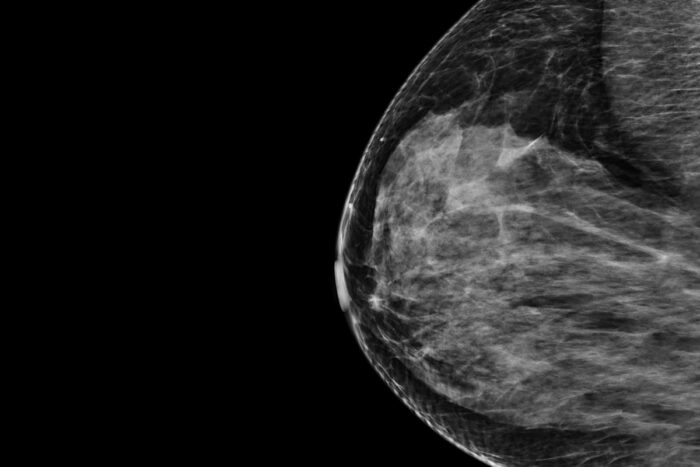
What if your mammogram could predict your five-year cancer risk, not just your current health? That’s the question WashU Medicine researchers Graham A. Colditz, MD, DrPH, and Shu (Joy) Jiang, PhD, set out to answer when they co-founded Prognosia, a biotech startup that harnesses AI-driven software to analyze mammograms to improve breast cancer risk prediction.
The startup’s first software package, Prognosia Breast, earned the FDA’s Breakthrough Device Designation in 2025. Now, its recent acquisition by Lunit — a global leader in AI for cancer diagnostics — has fast-tracked its path to the clinic.
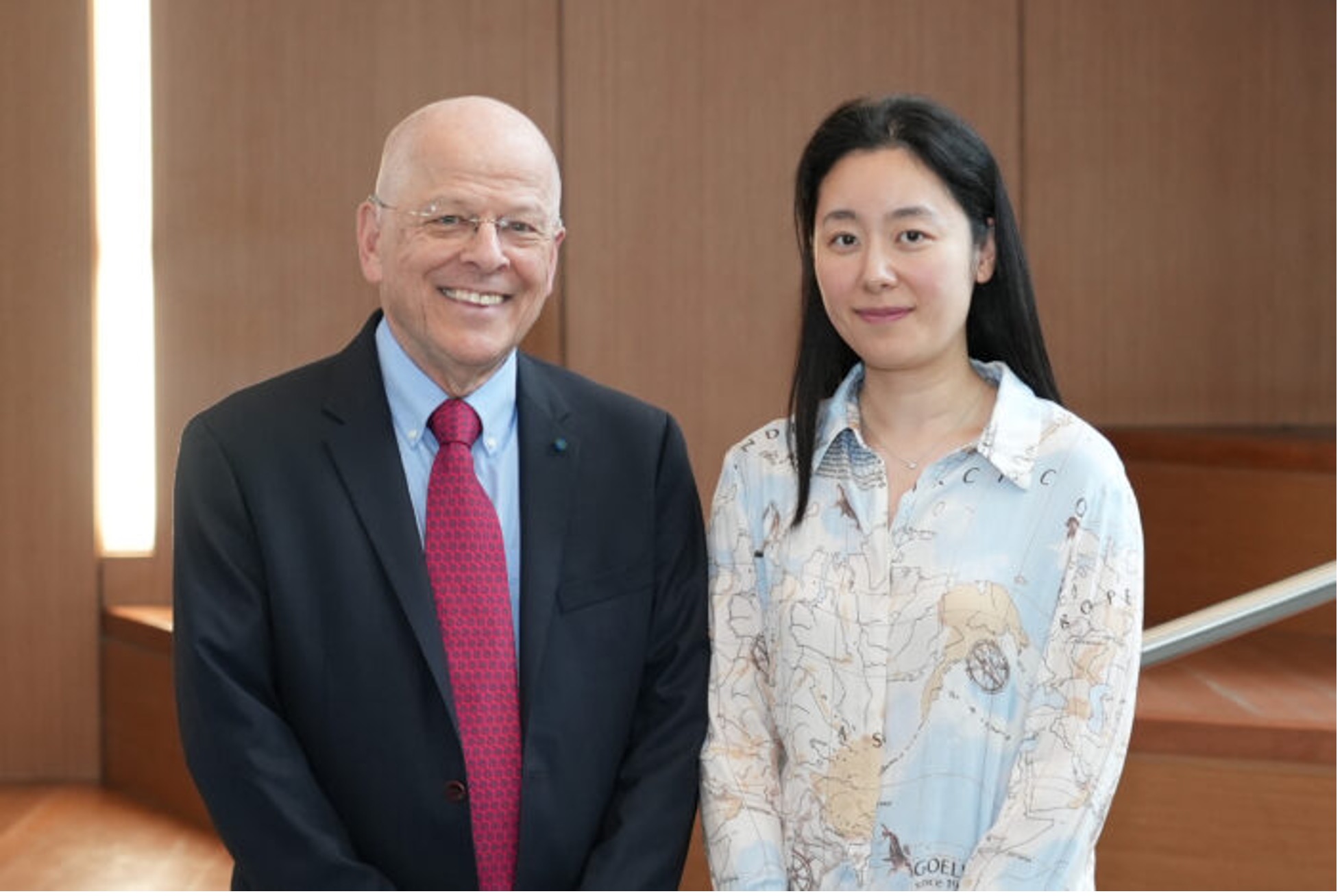
Co-founders Colditz and Jiang are excited about Lunit’s capabilities. Colditz is the Niess-Gain Professor of Surgery and associate director of prevention and control at Siteman Cancer Center at Barnes-Jewish Hospital and WashU Medicine. Jiang is an associate professor of surgery in the Division of Public Health Sciences at WashU Medicine.
“Lunit already has the infrastructure in place to streamline production and clinical implementation of our software that would be extraordinarily difficult for a new startup to build from scratch,” Jiang said. “Integrating our software into their existing systems could help this new technology get into the hands of physicians and patients very quickly.”
The system produces a five-year breast cancer risk score that makes it possible to compare a woman’s personalized risk to an average risk based on national breast cancer incidence rates.
“Improved risk prediction can help early detection, which has the potential to increase the likelihood of successful treatment that is less disruptive to people’s lives,” said Colditz, an internationally renowned cancer prevention researcher who has led the field for decades. “We recognized that there is a tremendous wealth of information about breast cancer development already stored and continuing to be newly collected in the form of regular mammograms. Until recently, there was no way to use this information to inform risk prediction or to develop new and better prevention strategies.”
Improving accuracy
The system’s advantage is clear — research shows it is more than twice as accurate than the standard questionnaire-based model for predicting five-year breast cancer risk. Unlike traditional methods that rely on limited historical factors, it also maintains this high performance equitably across diverse races, ages and breast densities.
These compelling results were instrumental in securing an FDA Breakthrough Device Designation, which accelerates the review process for devices that show exceptional promise to improve patient care.
For clinicians, adoption is straightforward. The technology is designed for seamless integration into existing workflows and is compatible with both standard 2D and 3D mammography systems.
Roadmap for growth
Nichole R. Mercier, PhD, assistant vice chancellor and managing director of WashU’s Office of Technology Management (OTM), highlighted the venture’s trajectory: “Prognosia is a superb example of harnessing all the resources available to WashU faculty to accelerate the launch of a company. Through Lunit’s acquisition of Prognosia, we’re excited to see this powerful startup venture become even better positioned to make transformative improvements in breast cancer risk estimation, prevention and early detection.”
This milestone was built on foundational support. Colditz and Jiang emphasized that Prognosia would not have been possible without OTM’s GAP funding program, which allowed them to do the work required for the FDA’s Breakthrough Device designation, as well as support from BioGenerator Ventures, which provided both financial support and expertise in business strategy from Entrepreneur-in-Residence David Smoller, PhD.
“With the guidance of OTM and David Smoller, we broadened our perspective beyond the technical aspects of the software to focus on the needs of the health-care providers who will use it to care for patients,” Colditz said. “That shift in mindset has been crucial to developing a technology that’s truly useful in the clinical setting.”