
Psilocybin providers follow safety guidelines, study finds
First look at how centers screen callers reassuring, but cost may impede greater access
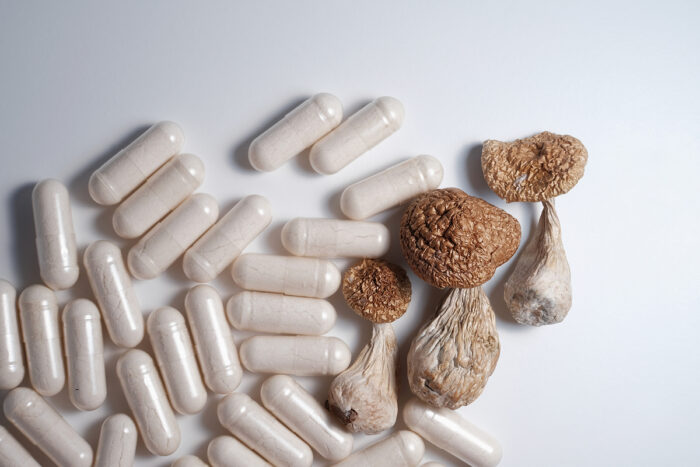 Getty Images
WashU researchers found that Oregon’s licensed psilocybin centers consistently followed recommended safety practices for screening clients, though steep operating and licensing costs strain both the centers and people seeking care.
In Brief
- Researchers evaluated licensed psilocybin centers in Oregon.
- All centers followed the law for patient screening and treatment provision; none allowed unsupervised use; all asked about psychiatric history, medications and risk factors before recommending services.
- Sessions cost around $1,900, and no center took insurance.
A new study has found that Oregon’s licensed psilocybin centers largely follow recommended safety guidelines, offering reassurance about how the first regulated psilocybin programs in the U.S. function in practice — though the cost of treatment may keep it out of reach for many.
The study, led by researchers at Washington University in St. Louis and the University of Missouri, is the first independent look at how these centers vet their potential clients.
Since 2023, when Oregon became the first state to legalize regulated, supervised psilocybin — the psychoactive ingredient in “magic mushrooms” — it has drawn people with mental health conditions ranging from depression and anxiety to post-traumatic stress disorder and substance use disorders.
Some clinical trials have suggested that psilocybin, combined with psychological support or psychotherapy, can provide relief for some of these conditions, though the drug remains federally illegal. Until now, little has been known about what people actually encounter when they contact a psilocybin center — or what safeguards are in place.
To find out, researchers posing as prospective clients reached 15 of Oregon’s 22 active centers by phone and found that they consistently followed safety practices required by state law: no center allowed unsupervised or take-home use, and staff routinely asked about psychiatric history, medications and contraindications before discussing next steps. These findings complement a recent cohort study in which serious adverse reactions among 346 Oregon clients were uncommon.
The new study is officially published Oct. 12 in Health Affairs Scholar.
“Going in, we wondered whether Oregon’s model might work like a dispensary in practice — that you could call a center, pick up psilocybin and take it home with little screening along the way,” said co-senior author Kevin Xu, MD, an assistant professor of psychiatry at WashU Medicine. “Far from a dispensary model, I was surprised by how service centers asked detailed questions about callers’ mental health and risk factors. Services were also very expensive.”
The research team later interviewed center staff and found that high operating and licensing costs make these services hard to sustain for centers and hard to afford for people who might seek them. Indeed, four of the 26 centers Oregon had licensed closed before the study’s calls began, and another seven could not be reached by phone.
What do prospective clients experience when seeking psilocybin services?
The research team, which included experts in medicine, social work and public health, designed the study to follow the path a real client would take: reviewing the center’s website, then calling to ask questions.
“This latest innovative study highlights our unique interdisciplinary approach to psychedelic science.” Ginger Nicol, MD, WashU Medicine
Three co-authors made scripted calls in which they posed as potential clients with depression and a history of alcohol use disorder or a family history of psychosis. They documented whether staff asked about medications, suicidal ideation and psychiatric history, as required by Oregon’s legal framework for psilocybin services. They also documented the price quoted for services.
“These interactions were not just, ‘Hey, give me mushrooms,’ and that’s it,” said co-senior author Leopoldo J. Cabassa, PhD, a professor at WashU’s Brown School who also co-directs WashU’s Center for Mental Health Services Research. “These were thoughtful conversations where the facilitator engaged people, asked good questions, and tried to get as much information as possible. Facilitators pushed past a simple checklist to actually understand a caller’s history before making a recommendation for services.”
Nearly every center flagged psychoactive medications that should not be combined with psilocybin, and no center advised callers taking antidepressants to stop them without first consulting with their primary care physician.
The median cost of a session was $1,900, and no center accepted insurance, which would limit accessibility if the treatment is legalized in other U.S. states.
“Oregon has dosed more people with psilocybin in a regulated model than anywhere else in the world,” said first author Dani Adams, PhD, an assistant professor of social work in the College of Health Sciences at the University of Missouri and Director of the Collaborative for Missouri Psychedelic-Assisted Therapy, who began this line of research while a postdoctoral fellow at WashU working with Cabassa. “But it is still out of reach for most Americans who are struggling with their mental health.”
Bipartisan efforts to expand psilocybin access
Veterans in particular face high rates of PTSD, depression and suicide, which has fueled bipartisan interest in getting psychedelic-assisted therapy approved by the U.S. Food and Drug Administration (FDA). Cabassa noted that in the meantime, some veterans unable to access or afford regulated care in the U.S. have instead sought unregulated treatments abroad, highlighting the importance of getting domestic access right.
WashU has been a leader in psychedelic research on multiple fronts. Co-author Ginger Nicol, MD, a professor of psychiatry at WashU Medicine, co-directs the Center for Holistic Interdisciplinary Research in Psychedelics alongside Cabassa, and was the principal investigator on a landmark 2024 study in Nature that showed how psilocybin temporarily desynchronizes activity across the human brain, among the first studies to map the drug’s effects at that scale.
“This latest innovative study highlights our unique interdisciplinary approach to psychedelic science,” Nicol said. “The team recognized an opportunity and acted swiftly to collect data that fills a major gap in scientific knowledge.”
With the new study, Cabassa and Nicol noted, WashU’s footprint in the field has grown from understanding brain circuitry to real-world implementation.
“We have to figure out what safeguards are needed and make sure those are maintained as the system solves for accessibility,” said Cabassa.