



Rewiring hope: A new era of precision treatment for Parkinson’s disease
For the more than 10 million people worldwide affected by Parkinson’s disease, reminders of the devastating disorder are everywhere: hand tremors make getting dressed a daily challenge, muscle stiffness leads to chronic pain with every step, restless sleep causes intense exhaustion, memory and mood changes make previously enjoyable activities undesirable.
For too long, patients and their families have had only one option: mitigate the symptoms. But the disease ravages on, eventually taking over body, mind and spirit. Until now.
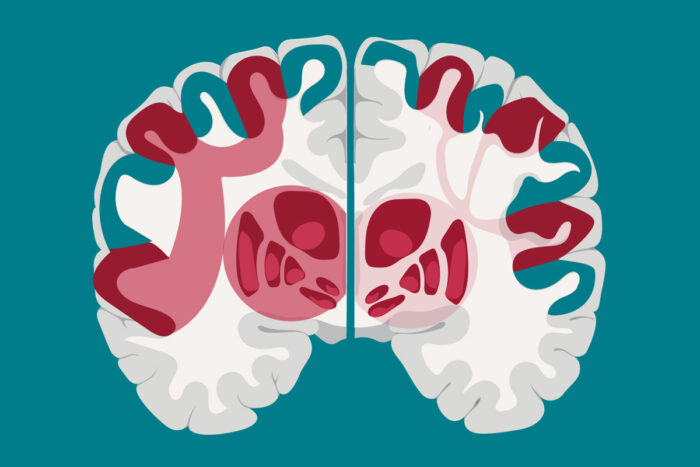
Scientists from WashU Medicine and Changping Laboratory in China have identified a brain network that may be the “command center” for Parkinson’s disease — paving the way for personalized, non-invasive treatment that could slow or even reverse the progression of the disease.
For decades, doctors focused on the basal ganglia, the part of the brain that controls muscle movements, as the source of Parkinson’s. But this didn’t explain why patients also deal with “non-motor” issues like sleep, memory and digestive problems.
Nico U. Dosenbach, MD, PhD, the David M. & Tracy S. Holtzman Professor of Neurology, Hesheng Liu, PhD, and their respective teams identified the Somato-Cognitive Action Network (SCAN) as the core network responsible for Parkinson’s. First described by Dosenbach in 2023, the SCAN links the parts of the brain responsible for thinking and planning with the parts that control movement. In people with Parkinson’s, this network is “hyperconnected,” disrupting not only movement but also cognitive and bodily functions.
In a clinical trial, 18 patients who received an experimental non-invasive neuromodulation therapy called transcranial magnetic stimulation (TMS) targeting the SCAN more than doubled symptom improvement compared to patients receiving TMS directed at surrounding brain areas.
“This work demonstrates that Parkinson’s is a SCAN disorder,” said Dosenbach. “Changing the activity within SCAN could slow or reverse the progression of the disease, not just treat the symptoms.”