
Gordon receives Gabbay Award
‘Father of microbiome’ honored for transformative research impacting childhood malnutrition
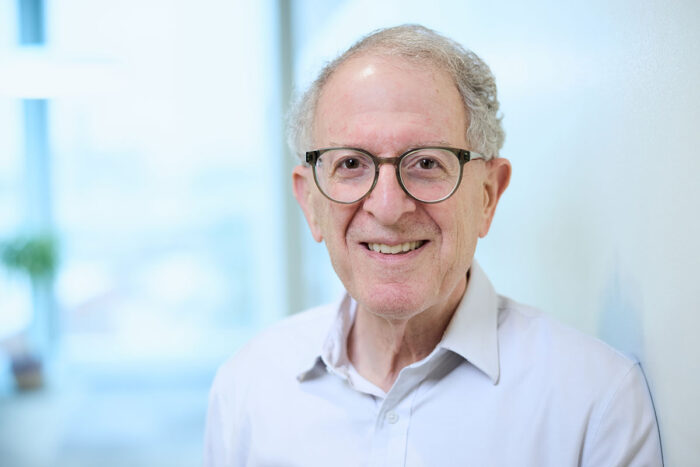 Matt Miller/WashU Medicine
Jeffrey Gordon, MD, of WashU Medicine has received the Gabbay Award from Brandeis University recognizing his outstanding contributions to the field of gut microbiome research.
Jeffrey I. Gordon, MD, the Dr. Robert J. Glaser Distinguished University Professor at WashU Medicine, has received the 2026 Jacob and Louise Gabbay Award in Biotechnology and Medicine from Brandeis University. The annual award recognizes scientists in academia, medicine or industry whose outstanding work has shown “significant practical applications in the biomedical sciences.”
Gordon, who directs WashU Medicine’s Edison Family Center for Genome Sciences & Systems Biology and has a secondary faculty appointment at WashU’s Bursky School of Public Health, is being honored for his foundational discoveries revealing the role of the gut microbiome in shaping human health and disease. In particular, his research has fueled innovative approaches to treating childhood malnutrition.
Past recipients of the award include groundbreaking researchers such as Jennifer Doudna, PhD, and Emmanuelle Charpentier, PhD, for their work on the CRISPR/Cas9 gene editing system; and Karl Deisseroth, MD, PhD, Gero Miesenbock, MD, and Edward Boyden, PhD, for their discovery and use of optogenetics to regulate brain cell activity.
The gut microbiome is a vast and complex community of microbes that colonizes the human gastrointestinal tract beginning at birth. Undernutrition affects more than 200 million children worldwide. Gordon’s discoveries indicate that healthy growth of infants and children is dependent in part on a properly synchronized program of co-development of the gut microbiome and a child’s organ systems. His group has provided evidence for a causal relationship between perturbed gut microbiome development and undernutrition.
In collaboration with Tahmeed Ahmed, executive director of the International Centre for Diarrhoeal Disease Research, Bangladesh (icddr,b), they identified therapeutic targets in the gut microbiomes of undernourished Bangladeshi children, developed microbiome-directed therapeutic foods, and demonstrated through randomized controlled clinical trials that repair of their gut microbiomes by treatment with a microbiome-directed therapeutic food results in growth responses and effects on mediators of multiple facets of physiology that are superior to what is obtained with commonly used therapeutic foods. His lab’s follow-up analyses of the mechanisms by which their microbiome-directed therapeutic food works have identified several naturally occurring complex carbohydrates that are its key bioactive components.
Gordon’s work exemplifies the powerful connection between medical innovation and public health, bringing together microbiome science, food science and human nutrition to reveal how the biochemical components of food influence human development and health. His discovery of microbiome-directed therapeutic foods provides important lessons for advancing the field of precision nutrition during this time when the naturally occurring biochemical components of major food staples are being delineated. His work also will help shape public health policies for how children should be fed during the weaning period in ways that help ensure healthy microbiome development as well as inform approaches used for food processing.
The collaboration between Gordon and Ahmed is an example of an academic lab in a high-income country partnering with an international organization in a low- to middle-income country in ways that advance basic and clinical science, build capacity, and create standards for the ethical conduct of microbiome work. Their development of microbiome-directed therapeutic foods was named one of TIME Magazine’s Best Inventions of 2025.
Gordon’s contributions are also illustrated by the fact that a remarkable number of the 151 students who received their doctoral or post-doctoral training with him are currently playing leading roles in the field of microbiome research. The accomplishments of his trainees and those of his trainees’ students were recently celebrated in a two-day university-wide symposium entitled Eras of the Microbiome.