
Finding order in the inner chaos of our cells
New technique wrangles evasive proteins to dissect the cause of diseases and design potential new therapeutics
 Getty Images
WashU Medicine researchers have developed a system to synthesize proteins that have a constantly shifting shape. The innovation creates new opportunities to understand the basis of disease and design potential medical interventions.
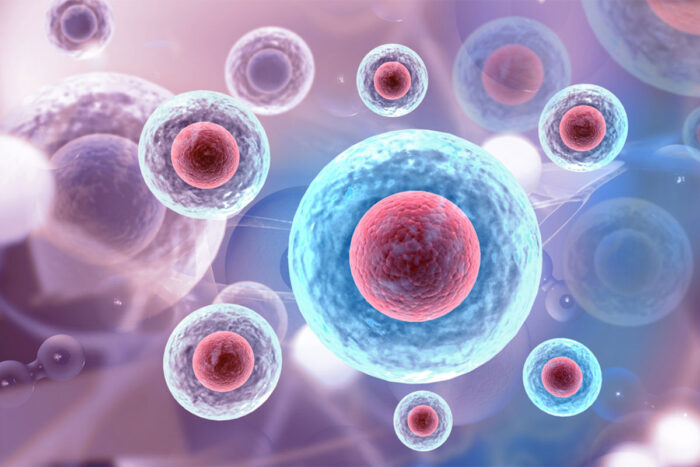
The vast majority of proteins in our bodies contain regions that are in a constant state of wiggling, shape-shifting every few nanoseconds to completely change how they look. Information on how these shapeshifting proteins work is critical to understanding health and disease and to developing drugs for cancer, neurodegeneration and myriad other conditions. However, it has been challenging for scientists to pin down precisely how these regions function, and how they go awry in disease.
Now, researchers from Washington University School of Medicine in St. Louis and Syracuse University have built a tool that can design such “disordered” proteins and untangle their functionality. The innovation has the potential to accelerate the scientific exploration of a vast and underexplored area of biology.
The study is published in Nature July 29.
An important way scientists study proteins is to design synthetic equivalents of the molecules that they can then test in various ways. Until now, advances in such protein design have applied almost entirely to “folded” proteins — or their folded parts — that have a defined three-dimensional shape.
Yet 70% of human proteins also contain disordered regions that don’t have a stable 3D structure. These regions can play critical roles in a variety of different cellular processes and human diseases. Researchers’ ability to predict how they will behave, or to design synthetic versions to study their function, was limited.
“The way people would typically try to study and design stable, folded proteins doesn’t really work very well for disordered proteins,” said Alex Holehouse, PhD, an associate professor in the WashU Medicine Department of Biochemistry and Molecular Biophysics. He and his colleague Ryan Emenecker, PhD, a faculty instructor in the same department and lead developer and co-corresponding author on the study, have been working on an alternative way to tackle this challenge for almost five years.
“The ability to design disordered proteins at a large scale with our platform now allows us to learn how their component sequences affect the cell,” Emenecker said, “and it gives us a lens through which we can learn how naturally occurring changes in these proteins might drive diseases like cancer.”
The technique also has potential for driving medical advancements. For instance, Holehouse, who is a research member of Siteman Cancer Center, based at Barnes-Jewish Hospital and WashU Medicine, is seeking to optimize therapeutics that rely upon disordered proteins. Holehouse and Emenecker have received a grant through Siteman to improve CAR-T cells, an anti-cancer therapy in which immune cells are genetically modified to attack tumor cells.
A key protein on the surface of CAR-T cells contains a disordered region that guides the cell’s attack response. Until now, scientific efforts to improve its performance in destroying cancer cells have been conducted largely by trial and error.
“With our technique, we can design better versions of these disordered regions to do the signaling in different ways,” said Holehouse. “The hope is we won’t be limited by the types of constraints that are currently hurting the efficacy of CAR-T therapies. That’s a very concrete place where these tools can move medicine forward.”
A GOOSE chase for disordered proteins
Holehouse, Emenecker and their collaborators, including co-corresponding author Shahar Sukenik, PhD, a faculty member in the Department of Chemistry at Syracuse University, developed the protein-design system, called GOOSE (an acronym derived in an appropriately disordered way from Generate disOrdered prOtiens Specifying propErties).
Loaded with a large library of the sequences for protein building blocks that are associated with specific cell functions, GOOSE produces blueprints for custom-built disordered proteins that are then created in genetically engineered cells. Scientists can remove or add building blocks as desired and test what effect they have on the activities of a cell.
“This opens the possibility of being able to make new sensors that are sensitive to things outside what natural sequences would be attuned to, like toxins or cell damage.” Ryan Emenecker, PhD, WashU Medicine
Among various applications, one of GOOSE’s first tests was to generate synthetic proteins that could help cells respond to changes in external stressors — in this case, drought.
“We were able to very quickly design 2,300 different proteins that would respond to drought conditions in yeast,” said Emenecker. He said that many of these synthetic proteins proved GOOSE’s utility by working as intended, helping the cells’ recovery after drying out. Even more promising, many of them performed much better than the yeast’s natural proteins. This work directly contributes to Holehouse, Emenecker and Sukenik’s ongoing work as part of a larger National Science Foundation initiative to engineer more environmentally resilient crops.
“More broadly, this opens the possibility of being able to make new sensors that are sensitive to things outside what natural sequences would be attuned to, like toxins or cell damage,” Emenecker said. “It has the potential to be very valuable.”