
Zipfel elected president of the Society of Neurological Surgeons
Head of Taylor Family Department of Neurosurgery is a national leader in the treatment and research of cerebrovascular disorders
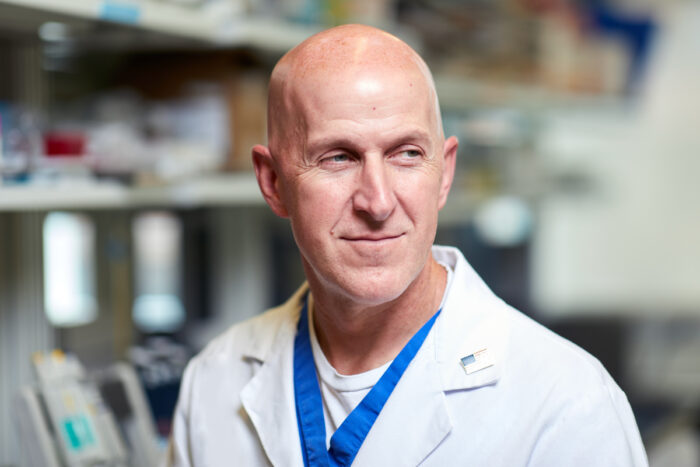 Matt Miller/WashU Medicine
Gregory Zipfel, MD, head of the Taylor Family Department of Neurosurgery at WashU Medicine, has been elected president of the Society of Neurological Surgeons, continuing a tradition of WashU Medicine leadership of the society dating back to 1920.
Gregory J. Zipfel, MD, the Ralph G. Dacey Distinguished Professor of Neurosurgery and head of the Taylor Family Department of Neurosurgery at WashU Medicine, has been elected president of the Society of Neurological Surgeons. He will serve a one-year term that began May 17.
Zipfel has led the Taylor Family Department since 2019 and is the neurosurgeon-in-chief at Barnes-Jewish Hospital. He also treats patients at The Brain Tumor Center at Siteman Cancer Center, based at Barnes-Jewish Hospital and WashU Medicine. Zipfel specializes in caring for patients with cerebrovascular disease and skull base tumors.
His research focuses on cerebrovascular conditions such as stroke, work that has led to the development of new treatments to reduce brain injury after brain aneurysms rupture. He also studies the vascular contributions to dementia, including new insights on how the buildup of plaques in brain blood vessels, characteristic of Alzheimer’s disease, can create vascular oxidative stress that contributes to cognitive decline.
Zipfel is strongly committed to neurosurgery education and mentorship and is the principal investigator of the National Institutes of Healt-funded National Neurosurgeon Research Career Development Program. He also serves in leadership roles with the Neurosurgery Research and Education Foundation and the Emerging Investigator Mentoring Program of the American Academy of Neurological Surgery.
The Society of Neurological Surgeons is the oldest neurosurgical society in the world and was founded to advance the quality of care for neurosurgical patients through education and research. WashU Medicine’s connections to the society go back to Ernest Sachs, MD, a faculty member who was the first professor of neurosurgery in the U.S. and a founding member of the organization in 1920. All five chairs of the WashU Medicine Taylor Family Department of Neurosurgery — including Zipfel’s predecessor and mentor Ralph G. Dacey Jr., MD — have served as president of the society.