
Dean’s Medals honor six individuals whose impact advances medicine and improves lives
Honorees recognized for extraordinary contributions
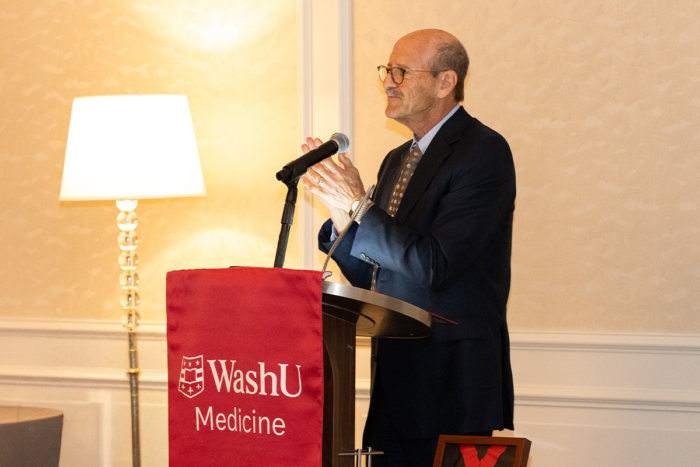 Erin Leu / WashU
David Perlmutter, MD, executive vice chancellor for medical affairs, the Spencer T. and Ann W. Olin Distinguished Professor and the George and Carol Bauer Dean of WashU Medicine, recognizes the inaugural Dean’s Medal recipients honored in 2025 on the Medical Campus.
Six individuals whose work has transformed patient care, advanced scientific discovery, strengthened medical education and expanded WashU Medicine’s impact around the world have been honored with the 2026 Dean’s Medals. The annual awards recognize extraordinary contributions to WashU Medicine and celebrate leaders whose achievements embody the institution’s interconnected missions of patient care, education and research.
This year’s recipients include Carol Loeb for leadership and service; Ramaswamy Govindan, MD, for clinical excellence; Dominique Cosco, MD, for education; Jeffrey I. Gordon, MD, for research; and Randall Bateman, MD, and David Holtzman, MD, for innovation and commercialization.
“At WashU Medicine, our excellence is defined by our people — how they care for patients, push the boundaries of discovery, and shape the next generation of physicians and scientists,” said David Perlmutter, MD, executive vice chancellor for medical affairs, the Spencer T. and Ann W. Olin Distinguished Professor and the George and Carol Bauer Dean of WashU Medicine. “This year’s Dean’s Medals recipients have strengthened our institution, inspired future generations and made a lasting impact in the lives of patients and the communities we serve.”
Carol Loeb — Leadership and Service
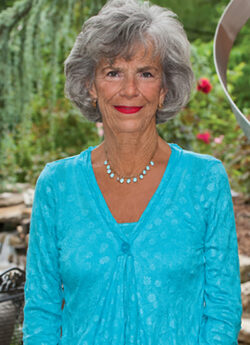
Carol Loeb received the Dean’s Medal for Leadership and Service for her visionary support of education at WashU Medicine.
Her philanthropy over decades has helped to position the institution as a national leader in medical education. The Loeb Teaching Fellows Program, created in 2004 by Loeb and her now late husband, Jerome “Jerry” Loeb, MA ’64, enables early- and mid-career faculty to drive innovation in strategic areas while elevating the quality and visibility of teaching at WashU Medicine. Thanks to her generosity, WashU Medicine has three Carol B. and Jerome T. Loeb Professorships in Medical Education as well as the Carol B. and Jerome T. Loeb Professorship in Orthopaedic Surgery, all of which cultivate teaching excellence. Loeb serves on the WashU Medicine National Council and is a life member of the WashU Danforth Circle Dean’s Level. She previously received the Robert S. Brookings Award and WashU Medicine’s Second Century Award.
Ramaswamy Govindan, MD — Clinical Excellence
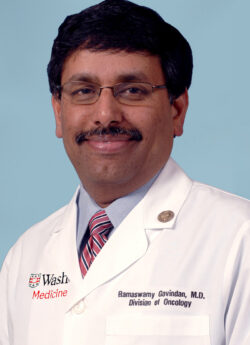
Govindan, the Anheuser-Busch Endowed Chair of Medical Oncology, received the Dean’s Medal for Clinical Excellence. He has dedicated his career to improving outcomes for patients with lung cancer and cares for patients at Siteman Cancer Center, based at Barnes-Jewish Hospital and WashU Medicine.
Govindan is internationally recognized for his clinical expertise, medical knowledge, compassionate care and being accessible to his patients, even after hours. Known as a superb clinician, he has provided exceptional care to thousands of patients with primary and metastatic lung cancer. Govindan has been named a Castle Connolly Top Doctor for the past five years. He expertly provides rapid diagnoses for patients with complex lung conditions who travel from across the U.S. to receive his care, and he develops individualized precision treatment plans based on tumor type and molecular genomic testing. Govindan works closely with patients — and their families — to ensure they understand all treatment options and the availability of clinical trials. Govindan is also known for providing cutting-edge investigational therapies to patients who do not respond to first-line therapies, offering ongoing hope in challenging situations.
Dominique Cosco, MD — Education
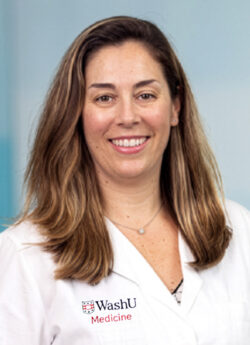
Cosco, a professor in the John T. Milliken Department of Medicine and associate dean for Graduate Medical Education, has received the Dean’s Medal for Education.
Cosco strengthens the next generation of physicians through her work to oversee all residency and fellowship training across WashU Medicine. Previous to her role as associate dean for Graduate Medical Education, she served as director of the Internal Medicine Residency Program and director of the TEACH certificate program, a year-long national faculty development initiative run by the Society of General Internal Medicine. With a focus on faculty coaching and development, she is especially committed to mentoring residents and fellows who want to become clinician-educators. Her work reflects a deep dedication to teaching, mentorship and improving how future doctors learn and grow in their careers.
Jeffrey I. Gordon, MD — Research
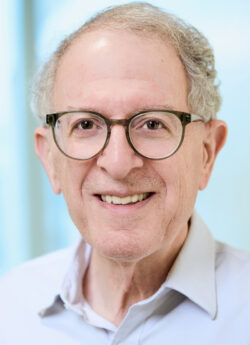
Gordon, the Dr. Robert J. Glaser Distinguished University Professor and founding director of WashU Medicine’s Edison Family Center for Genome Sciences & Systems Biology, received the Dean’s Medal for Research for his groundbreaking discoveries of how the human gut microbiome contributes to many fundamental elements of health, as well as to diseases such as childhood malnutrition that represent global health challenges.
Widely known as the “father” of human microbiome research, Gordon’s studies of how the gut microbiome normally forms after birth in infants and children, and how disturbances in this process contribute to childhood malnutrition, have led to his group’s development of microbiome-directed foods for more effective and comprehensive treatment. Gordon has spent his entire career at WashU Medicine, where he has trained more than 150 PhD and MD/PhD students and postdoctoral fellows, many of whom now are leaders in the microbiome field. He is member of the National Academy of Sciences, the National Academy of Medicine and the American Philosophical Society.
Randall J. Bateman, MD, and David M. Holtzman, MD — Innovation and Commercialization
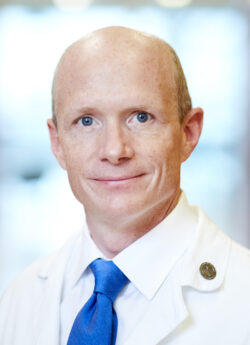
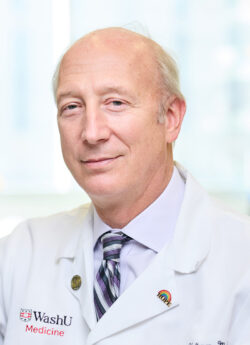
Bateman, the Charles F. and Joanne Knight Distinguished Professor of Neurology, and Holtzman, the Barbara Burton and Reuben M. Morriss III Distinguished Professor, both in WashU Medicine’s Department of Neurology, have jointly received the Dean’s Medal for Innovation and Commercialization. Together, they co-founded C2N Diagnostics, a WashU startup advancing blood-based tests for accurate and earlier diagnosis of Alzheimer’s disease, revolutionizing how clinicians can identify Alzheimer’s and associated neurological conditions. The blood tests originated from research that Bateman and Holtzman conducted at WashU Medicine over many years.
Bateman’s own research focuses on how proteins linked to Alzheimer’s and other dementias are produced and cleared in the brain. He also directs the Dominantly Inherited Alzheimer Network Trials Unit, an international consortium studying early-onset inherited Alzheimer’s disease. Bateman’s lab first demonstrated that clearance of a protein called amyloid is impaired in Alzheimer’s disease, then used that insight to create the first highly accurate blood test to diagnose the disease used in patient clinics.
Holtzman studies the molecular and cellular processes that drive Alzheimer’s disease, with a particular focus on how the APOE gene — the strongest known genetic risk factor for the disease — influences both the accumulation and clearance of amyloid in the brain and the neurodegeneration that follows. His lab has also shown how disruption of the sleep-wake cycle accelerates the accumulation of amyloid and another protein known as tau, and how immune cells in the brain interact with other immune cells to drive neurodegeneration.
“One of the great privileges of serving as dean is recognizing individuals whose work embodies the very best of WashU Medicine,” Perlmutter said. “These honorees have advanced knowledge, trained future leaders, cared for patients with compassion and excellence, and transformed discoveries into real-world solutions. Their achievements reflect the profound impact that one person can have on an institution and the future of medicine.”