
Global consortium launches AI tools to accelerate Alzheimer’s research, treatments
Founding members include WashU Medicine, pharmaceutical companies, philanthropic groups and others
 Getty Images
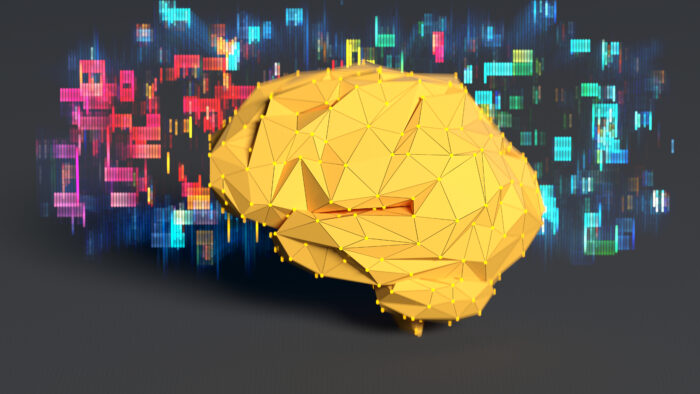
A global consortium co-founded by WashU Medicine and directed by neurologist Randall J. Bateman, MD, brings together members from academia, major pharmaceutical companies and philanthropic organizations. The consortium, C-BRAIN, is launching three open-source AI tools designed to accelerate Alzheimer’s research.
The Consortium for Biomedical Research and Artificial Intelligence in Neurodegeneration (C-BRAIN), a global collaboration of academic researchers, pharmaceutical companies, and philanthropic organizations of which Washington University School of Medicine in St. Louis is a founding member, today launched three open-source AI tools to accelerate research aimed at developing new treatments for Alzheimer’s disease and other neurodegenerative diseases. Announced at the Alzheimer’s Association International Conference in London, the tools synthesize Alzheimer’s and neuroscience literature, surface insights from unpublished and so called “dark” or hidden data, and provide peer review-style feedback for researchers. WashU Medicine led the formation of the 17-member consortium.
C-BRAIN’s mission is to build an “AI Biomedical Research Scientist” that works alongside human researchers to address a persistent challenge: more than 99% of Alzheimer’s drug candidates fail in clinical trials. Despite decades of research, vital scientific knowledge remains fragmented across millions of published papers, massive complex datasets, and unpublished research results. AI provides scientists the capability to harness all this information toward a shared goal.
“Leveraging the AI revolution with scientists’ ability to generate enormous amounts of research results has created an incredible opportunity,” said Randall J. Bateman, MD, the Charles F. and Joanne Knight Distinguished Professor of Neurology at WashU Medicine, one of the world’s leading Alzheimer’s researchers and the director and founder of C-BRAIN. “The brain is immensely complex, but artificial intelligence inspired by the human brain can find relationships within massive amounts of data that a single human mind simply cannot hold. Our expectation is that discoveries made over the next few years will be breakthroughs that wouldn’t be possible without AI.”
Bateman anticipates that C-BRAIN’s AI Scientist will accelerate the pace of discovery many times over by boosting the efficiency and effectiveness of Alzheimer’s disease and neurodegeneration research.
Open-sourcing an AI-powered toolbox
C-BRAIN’s work to date places three interrelated, open-source AI tools into the hands of the global research community:
- AI Literature and Data Synthesis: Synthesizes Alzheimer’s and neuroscience literature using advanced retrieval methods, helping researchers evaluate hypotheses faster than manual review allows.
- Dark Data Analyzer: Surfaces insights from unpublished data and negative results contributed by academic and pharmaceutical members, helping researchers avoid repeating failed experiments.
- Reviewer Three: A critical reasoning agent that provides scientifically grounded, peer review-style feedback on grant proposals, manuscripts and experimental designs.
“It is antithetical to science that we would develop AI tools that function as an uninterpretable black box,” Bateman said. “By delivering an entirely open system, scientists worldwide can look at the code, analyze it, test it, improve on it, and collectively find where the flaws are. These tools are built for scientists, by scientists, and are owned by the scientific community.”
The newly released tools were built in part using resources from the National Artificial Intelligence Research Resource (NAIRR) Pilot program, an initiative of the National Science Foundation and Microsoft. They were developed by Adith Boloor, PhD, a staff AI scientist with the WashU Digital Intelligence and Innovation (DI2) Accelerator; Ade Ojewole, C-BRAIN’s Chief Technology Officer; and Eric Landsness, MD, PhD, C-BRAIN’s associate director and a WashU Medicine assistant professor of neurology.
Collaboration for the public good
The consortium’s federated design lets members keep full control of their own data. Proprietary and unpublished pharmaceutical data can inform the tools without being exposed or transferred, and a scientist-in-the-loop approach keeps human researchers involved at every stage — a structure Bateman describes as essential to making AI-driven discoveries that other scientists can verify and reproduce.
The design of C-BRAIN appeals to members for different reasons. For the consortium’s pharmaceutical partners, it opens a rare pre-competitive space to sharpen the science that precedes drug development — identifying the right biological targets and mechanisms before companies leverage their expertise to develop treatments.
“By bringing together advanced computational tools, unique datasets, and deep scientific expertise, C-BRAIN is helping the field ask better questions and move with speed toward answers on neurodegenerative diseases,” said Richard Hargreaves, PhD, Senior Vice President of the Neuroscience Thematic Research Center at Bristol Myers Squibb, a founding and major contributing member of the consortium. “Partnerships like this are central for us at Bristol Myers Squibb to ensure we have the right tools in place as we explore both symptomatic and disease-modifying approaches — with the ultimate ambition to bring medicines to patients faster.”
For the consortium’s philanthropic backers, the appeal is the long view: a set of openly available, non-commercial tools that any approved biomedical researcher can use to move the field forward.
“Alzheimer’s science is at an inflection point, and emerging advances in AI hold unprecedented promise to transform research and accelerate innovation,” said Isobel Coleman, Chief Executive Officer of the Alzheimer’s Drug Discovery Foundation, a major contributing member of the consortium. “C-BRAIN brings together the kind of cross-sector collaboration needed to build the foundation for that progress. The ADDF is proud to invest in this effort, which has the potential to strengthen scientific rigor, uncover new patterns in complex data, accelerate discovery, and help move the field toward a new era of precision medicine.”
Bateman sees those motivations converging on a single point. “Aligning drug developers, philanthropic and patient-advocacy groups, and researchers and doctors who have fought these diseases for decades, and giving them these AI tools, is how we deliver on our promise to patients and the people who care for them,” he said.
All three tools are freely available to biomedical researchers working in the field of neurodegeneration, who can register for approval by contacting C-BRAIN. A demonstration of the tools’ capabilities is also publicly available on the consortium’s website.
C-BRAIN Major Contributing Members
- Alzforum
- AD Data Initiative
- Alzheimer’s Association
- Alzheimer’s Drug Discovery Foundation
- Anonymous Foundation
- Bristol Myers Squibb
- The Dolby Family
- Gates Ventures
- Johnson & Johnson
- Rainwater Charitable Foundation
- Robertson Foundation
- Sage Bionetworks
- Sanofi
- The 10,000 Brains Project
- WashU Medicine
C-BRAIN Key Members
- The Brigham and Women’s Hospital, Inc.
- Eisai Inc.