
Osteoarthritis therapy study advances with $17 million from ARPA-H
Funding will support collaboration to move single-injection treatment to reverse joint damage into clinical trials
 Getty Images
A WashU Medicine project to develop an injectable treatment to reverse tissue damage in osteoarthritis has received $17 million in phase 2 funding from ARPA-H.
In Brief
- WashU Medicine has received $17 million from ARPA-H to develop an injectable osteoarthritis treatment.
- The nanoparticle-based therapy regenerates damaged joint tissue.
- In collaboration with CRISPR Therapeutics and SynGenix, the team is preparing the treatment for clinical trials, set to begin in 18 months.
A project to develop a treatment that could reverse osteoarthritic tissue damage, led by researchers at Washington University School of Medicine in St. Louis, has received $17 million from the federal Advanced Research Projects Agency for Health (ARPA-H).
The funding marks the second phase of a groundbreaking effort to develop a once-a-year injection treatment for a condition that affects an estimated 33 million people in the United States.
The project is co-led by Farshid Guilak, PhD, the Mildred B. Simon Professor of Orthopedic Surgery at WashU Medicine and Director of Research for Shriners Children’s St. Louis, and Christine T. N. Pham, MD, the Guy and Ella Mae Magness Professor of Medicine and director of the Division of Rheumatology at WashU Medicine.
This next allocation of funding in phase 2.1 will support a collaboration with CRISPR Therapeutics and SynGenix, a WashU startup founded by Guilak and Pham commercializing the therapeutic technology. This partnership will complete the necessary testing and commercial development of the treatment, which was designed and tested by the WashU Medicine team in the first phase of the project.
Clinical trials are scheduled to begin in 18 months.
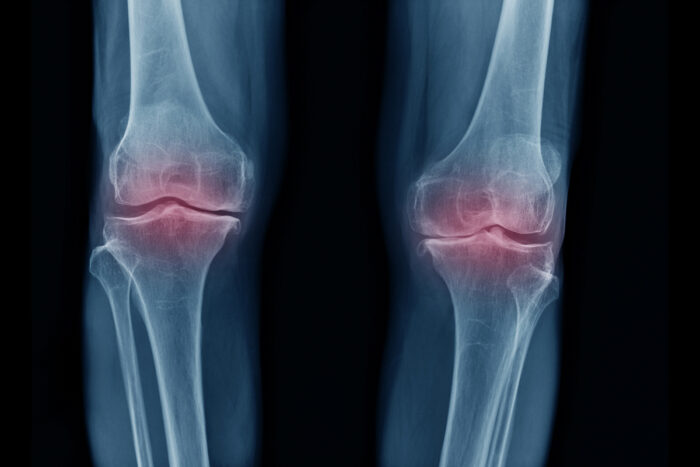
Osteoarthritis is a degenerative joint disease that can cause severe pain and limited mobility, but there are no disease-modifying drugs available for this condition.
“The only nonsurgical treatments currently available for osteoarthritis are for pain relief, which does not address the underlying condition,” Guilak said. “Osteoarthritis is probably the leading cause of disability for which there are no treatments that address the disease process. Our approach could allow patients to return to an active life, possibly with one injection a year, rather than having to take daily medications only to mask the pain.”
ARPA-H was established in 2022 as an agency within the U.S. Department of Health and Human Services to accelerate the development of high-impact solutions for health problems of this scale. Phase 1 of Guilak and Pham’s work began in 2024 under the agency’s Novel Innovations for Tissue Regeneration in Osteoarthritis (NITRO) program.
“We are thrilled to announce the successful transition of Washington University in St. Louis to Phase 2.1 of NITRO,” said ARPA-H NITRO Program Manager Ross Uhrich, DMD. “Their smart cell technology is a single-injection, genetically targeted therapy designed to activate only in the diseased joint, driving cartilage regeneration while suppressing the inflammatory signaling that fuels degeneration. This regenerative therapeutic is a valuable and unique asset within the NITRO portfolio that further enables us to eradicate osteoarthritis.”
Osteoarthritis treatment from nanoparticles
The second phase of funding was contingent on the team meeting its phase 1 milestones, by demonstrating in animal models that their treatment could regenerate osteoarthritis damage without any surgical intervention.
The treatment Guilak and Pham developed relies on a “smart cell” approach. Working with Xiaoxia Cui, PhD, an associate professor of genetics and director of the Genome Engineering & Stem Cell Center at WashU Medicine, the team engineered genetic codes delivered directly into the knee joint via nanoparticles. Once internalized in joint tissue cells, these constructs can sense and respond to osteoarthritis cues such as inflammatory signals or excessive mechanical loading, which are the physical forces acting on the joint.
Upon activation by the osteoarthritis cues, the engineered genetic codes instruct local cells in the joint to produce proteins that promote tissue repair and growth. Crucially, protein production ceases automatically once underlying disease signals subside, preventing excessive production of the biologic drug.
“In animal models, we were able to restore a joint with severe osteoarthritis to near-baseline levels — almost 100% recovery,” Pham said. “As a clinician, being part of something that could offer new treatment options for tens of millions of people is very exciting.”
Phase 1 was a university-spanning effort that included Lori Setton, PhD, the Lucy and Stanley Lopata Distinguished Professor and chair of the Department of Biomedical Engineering in WashU McKelvey Engineering; and Erik Herzog, PhD, the Viktor Hamburger Distinguished Professor in Arts & Sciences.
In addition to achieving specific scientific milestones during phase 1, the WashU team conducted extensive community outreach in alignment with ARPA-H NITRO Program’s mandate to make treatments accessible to disproportionately affected populations such as Native Americans, who have higher rates of osteoarthritis than the U.S. average. Partnering with Tobeya Ibitayo, an engagement officer with the St. Louis Integrated Health Network, the team conducted educational outreach to foster trust and encourage acceptance of this novel therapy across diverse communities.
“The response was overwhelmingly positive — many people we spoke to in the community are quite excited,” said Pham. “Even now I receive emails from people asking where and when they can sign up.”