

Low-carb diet delivers added liver benefits beyond weight loss
Clinical trial finds among several diets, ketogenic plan yields greatest boost to liver, metabolic health
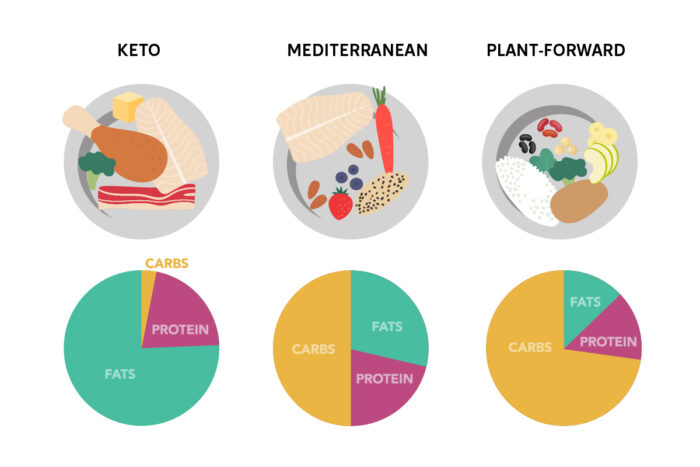 Katie Gertler/WashU Medicine
WashU Medicine researchers led a clinical trial testing three diets with different proportions of carbohydrates, fats and proteins and found all of them improved metabolic health, but a very low-carb ketogenic diet had additional benefits for liver health and blood sugar control.
There is no shortage of popular diets to try, and they can generally produce weight loss if followed to the letter. But are all diet plans created equal in terms of reducing the cardiometabolic risks that come with obesity, such as Type 2 diabetes and liver disease?
A randomized clinical trial from Washington University School of Medicine in St. Louis suggests they aren’t, even when they lead to identical amounts of weight loss. Comparing three commonly recommended diet plans, the researchers found that losing weight on any of them improved overall metabolic health in adults with obesity who also had elevated blood sugar and excess fat in their liver — which are important risk factors for developing diabetes. But limiting carbohydrates through a ketogenic diet offered additional benefits for liver health and blood sugar control.
The findings appear August 27 in Cell Metabolism.
“For patients with obesity, prediabetes and fatty liver disease, weight loss induced by a very low-carbohydrate diet provides additional therapeutic effects on glucose and lipid metabolism that should further help prevent the progression to more severe metabolic diseases than weight loss alone,” said Samuel Klein, MD, the Danforth Professor of Medicine and Nutritional Science at WashU Medicine and the study’s senior author. “But all three diets — despite vastly different macronutrient makeups, from very low carbohydrates to very high carbohydrates — successfully improved metabolic health through weight loss alone.”
Which diet best improves metabolic and liver health?
Obesity affects roughly four in 10 Americans, most of whom also face metabolic health risks, including insulin resistance, which leads to prediabetes, and fat buildup in the liver. If left untreated, these problems can progress to Type 2 diabetes, chronic liver disease and cardiovascular events, among other irreversible conditions. While weight loss is the gold standard for reducing obesity-related health risks, it hasn’t been clear which type of diet, in terms of its protein, fat and carb content, works best to improve metabolic health.
To explore that question, the researchers, including first author Max C. Petersen, MD, PhD, an assistant professor of medicine in the John T. Milliken Department of Medicine at WashU Medicine, and Gordon I. Smith, PhD, an associate professor of medicine in the department, randomly assigned 55 adults with metabolically unhealthy obesity — meaning obesity with prediabetes and fatty liver — to follow one of three diets for around five months: a low-carbohydrate, high-fat ketogenic diet; a high-carbohydrate, low-fat, plant-forward diet; or a Mediterranean diet balanced between the two. Participants received 100% of their food throughout the study and attended weekly meetings with a study dietitian to support adherence to the assigned diet.
Across all three groups, participants lost an equal amount of weight, shedding about 10% of their total starting weight, and boosted insulin sensitivity in muscle cells by roughly 50% from baseline. The comparable restoration of insulin sensitivity across diet groups suggests that the weight loss itself was the important factor in combatting muscle insulin resistance — not the combination of fat and carbohydrates used to get there.
“Many metabolically unhealthy patients also are candidates for GLP-1 medicines, which have been very useful tools for helping people lose weight. But our results show that choice of diet remains important because it has an impact on specific health outcomes that go beyond weight loss alone.” Max C. Petersen, MD, PhD, WashU Medicine
But this wasn’t the case for liver health. The researchers found that sensitivity to insulin in liver cells — which regulates how well the liver suppresses glucose production — improved two to three times more on the ketogenic diet compared with the other diets, though all three groups saw improvement. They also found that the ketogenic diet reduced fat inside the liver by 67% compared to 45% for the other two diets after five months.
“Fatty liver disease affects about 75% of adults with obesity worldwide and has become the fastest-growing cause of chronic liver disease and liver cirrhosis,” said Petersen. “Our study shows that for people with obesity and fatty liver disease, a low-carbohydrate ketogenic diet could help reduce that statistic.”
The ketogenic diet also provided greater improvements in blood sugar control than the other plans did, lowering 24-hour blood glucose measurements by 20% from baseline compared to 8% on the other diets. Insulin levels in the blood throughout the day also decreased by 74% on the low-carbohydrate diet compared to 44% and 27% on the Mediterranean and high-carbohydrate diets, respectively. This sharp decline in insulin reflects the decreased need for insulin to regulate blood glucose when consuming a very-low carbohydrate diet, so the pancreas doesn’t need to overproduce insulin to get a response.
Half of the participants on the low-carbohydrate diet reversed their prediabetes, compared to 29% of participants on the Mediterranean diet and 7% on the high-carbohydrate diet.
“Weight loss — even just a moderate amount — is universally beneficial in people who are metabolically unhealthy,” said Petersen. “Many metabolically unhealthy patients also are candidates for GLP-1 medicines, which have been very useful tools for helping people lose weight. But our results show that choice of diet remains important because it has an impact on specific health outcomes that go beyond weight loss alone.”
In future studies, the researchers are interested in understanding the fundamental mechanisms responsible for the metabolic benefits of weight loss, including the effects of GLP-1 medicines.
Abeeha Shamshad contributed to this story.